

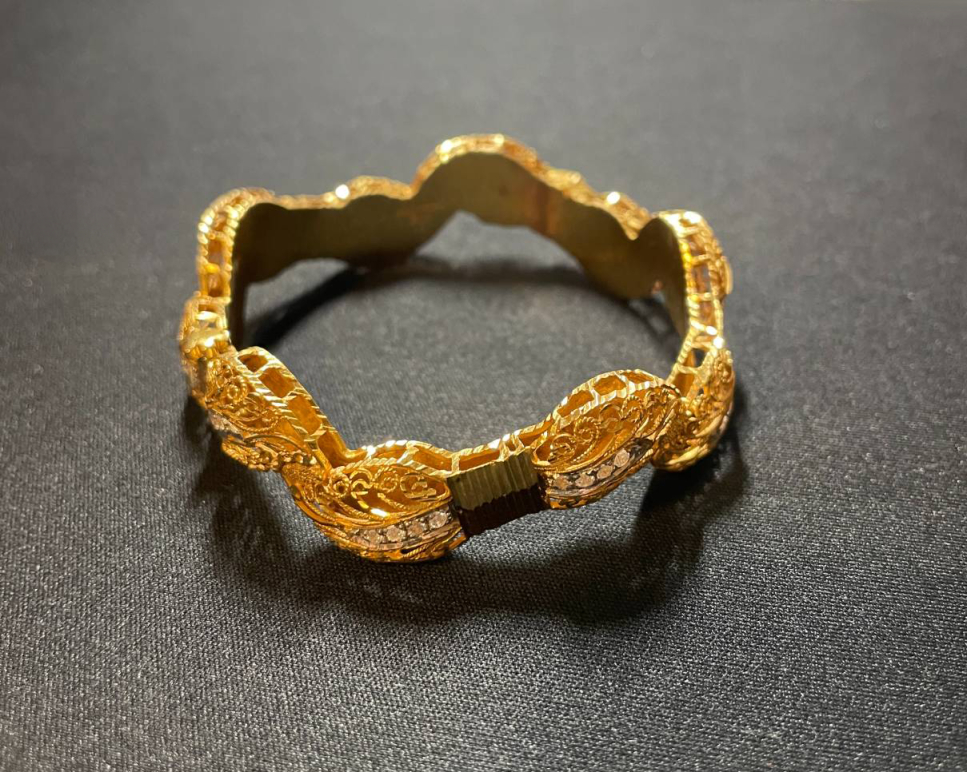
A gold bracelet can hold value in more than one place. The bracelet itself may be gold, the clasp may contain a different alloy, individual charms can have separate value, and certain diamonds, designer marks or vintage details may deserve more than a scrap-only evaluation.
Royal Element buys gold bracelets in Vancouver in wearable, damaged and incomplete condition. Bring yours in for transparent testing, an accurate weight and a no-obligation offer based on what the bracelet actually contains.
Walk-ins welcome · No obligation to sell · Instant payment when you accept.
































Your Bracelet Should Be Evaluated as a Complete Item
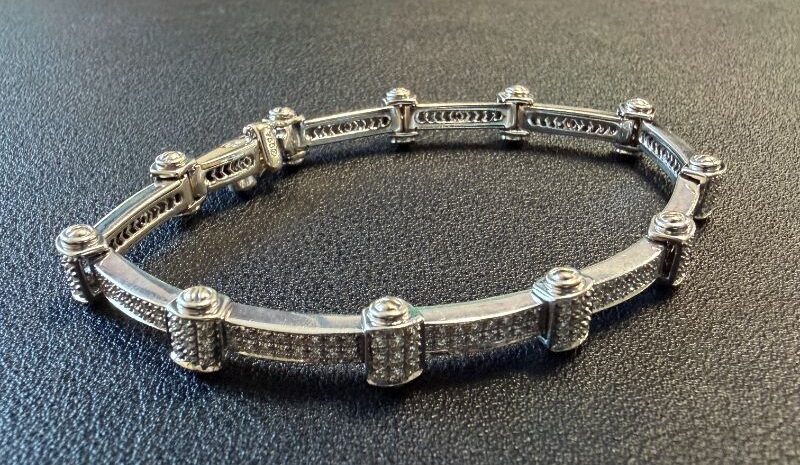
Two bracelets that look similar can have very different values. One may be a hollow 14K bangle with a base-metal hinge. Another may be a solid 18K bracelet with a desirable maker’s signature. A charm bracelet can contain several karats, and a tennis bracelet may carry much of its total weight in stones rather than gold.
That is why a useful evaluation should answer more than “How much does it weigh?” It should also explain:
- What gold purity was verified
- Which components were included in the payable weight
- Whether the bracelet is hollow or solid
- How charms, stones, clasps and safety chains were treated
- Whether a designer, estate or collectible market may add value
- Which current gold-market reference informed the offer
At Royal Element, you can ask these questions before deciding whether to sell.
Gold Bracelets We Buy
Bring one bracelet or an entire jewelry collection. Royal Element evaluates:
- Solid and hollow gold bangles
- Hinged bangles and gold cuffs
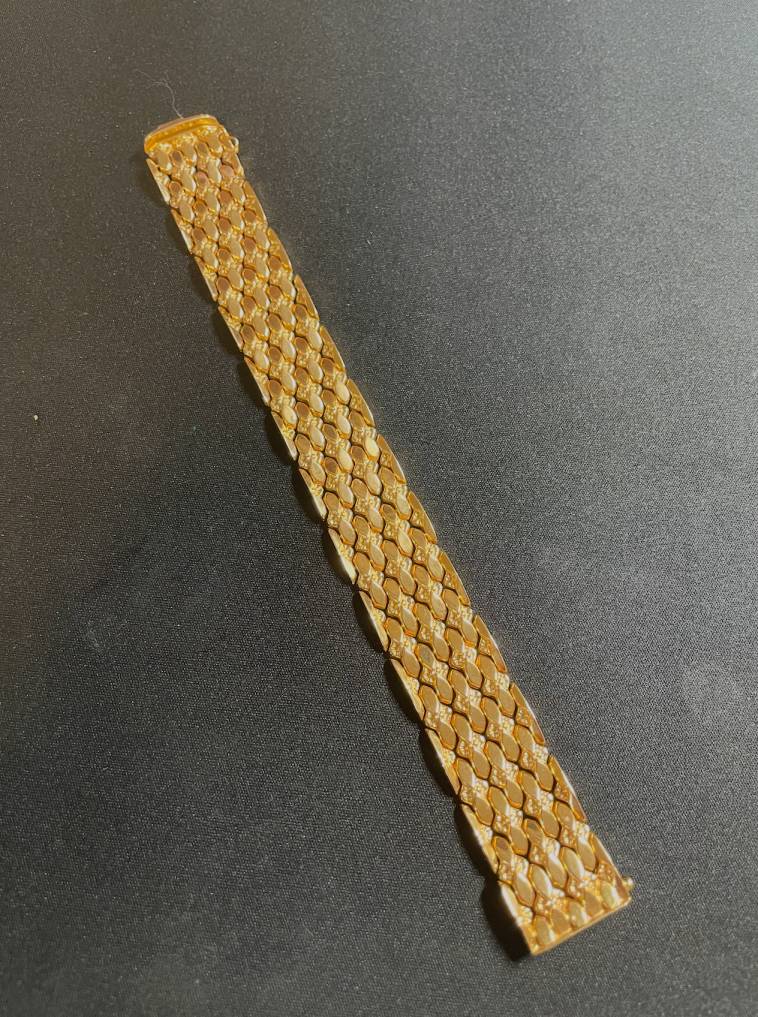
- Link bracelets, including Cuban, curb, Figaro, rope and Byzantine styles
- Gold charm bracelets with or without charms
- Gold ID and nameplate bracelets
- Diamond and gemstone bracelets
- Gold tennis and line bracelets
- White-gold, yellow-gold and rose-gold bracelets
- Two-tone and multi-color gold bracelets
- 10K, 14K, 18K, 22K and other gold purities
- Designer, vintage and estate bracelets
- Broken bracelets and damaged clasps
- Bracelets with missing links, stones or safety chains
- Unmarked pieces that need professional testing
Do not repair, polish or take the bracelet apart before your visit. A damaged bracelet can still contain valuable gold, and removing charms or stones at home can make the complete piece harder to assess.
For broader collections, see the types of gold jewelry Royal Element buys.
The Bracelet Value Map
A bracelet may contain several materials and value drivers in a small area. Each deserves the right treatment.
| Bracelet component | What should be checked | Why it affects the offer |
|---|---|---|
| Main body or links | Tested karat, weight, construction and repairs | Usually contributes most of the recoverable gold value |
| Clasp, hinge and safety chain | Metal purity, springs, pins and solder | Small mechanisms can contain non-gold parts or a different karat |
| Charms and tags | Individual markings, weight, brand and subject | Charms may differ from the bracelet and some may have separate resale appeal |
| Stones and settings | Stone type, quality, condition and non-gold weight | Marketable stones may add value; other stones must be accounted for accurately |
| Maker’s marks and design | Authenticity, age, craftsmanship and demand | A recognized designer or collectible style may be worth more as finished jewelry |
The goal is not to inflate or dismiss any component. It is to identify what contributes value and explain what does not.
How Much Is a Gold Bracelet Worth?
For a bracelet valued primarily for its gold content, the starting concept is:
Theoretical gold-content value = gold price per gram × item weight × verified purity
Common purity levels include approximately 41.7% pure gold for 10K, 58.5% for 14K, 75% for 18K and 91.6% for 22K. The karat stamp is useful, but it is not the final answer. Stamps can be worn, incorrect or attached to only one part of a bracelet.
The item’s total scale weight may also differ from its payable gold weight. Stones, steel springs, hinge pins, enamel, cord, leather, base-metal inserts and other materials are not pure gold. A professional evaluation accounts for those materials without guessing.
Use the Royal Element gold calculator to explore theoretical gold-content value by weight and karat. The calculator is educational, not a purchase offer. An actual offer follows inspection and testing and may also consider processing costs, market movement and value beyond the metal.
Why Bracelet Size Can Be Misleading
Bracelets are especially difficult to value by appearance. Their width, length and visual weight do not reveal how much gold they contain.
A wide bangle may be hollow
Hollow construction does not mean fake. A hollow 14K bangle is still 14K gold if testing verifies the alloy. It simply contains less metal than a solid bracelet of similar dimensions.
A tennis bracelet may contain substantial non-gold weight
Rows of stones and their settings can make a bracelet look and feel substantial. The gold, natural diamonds and other marketable stones should be considered separately rather than treating the entire gram weight as gold.
A charm bracelet may contain several purities
The base bracelet might be 14K while individual charms are 10K, 18K, gold-filled or plated. Some vintage or branded charms may also have collector demand beyond their metal content.
A clasp can be different from the bracelet
Replacement clasps, safety chains and repaired sections may not match the original gold. Small clasp springs and pins can also be made from a stronger base metal.
Two-tone does not always mean two metals
White, yellow and rose sections can all be karat gold, but some bracelets combine gold with stainless steel, silver or decorative plating. Each meaningful section should be identified.
Is Your Bracelet Worth More as Jewelry or as Gold?
There are three common valuation paths. A good buyer should be able to explain which path is driving the offer.
| Valuation path | Often fits | What matters most |
| Gold-content value | Broken, generic, incomplete or heavily worn bracelets | Verified purity, recoverable gold weight and current gold market |
| Wearable-jewelry value | Attractive bracelets in good condition with current resale demand | Style, construction, condition, length, weight and buyer demand |
| Designer, estate or collectible value | Authenticated signed pieces, rare charms, period jewelry or important gemstones | Maker, authenticity, provenance, craftsmanship, rarity and secondary-market demand |
A broken generic bracelet may be worth primarily its gold content. An authenticated designer bangle, antique charm bracelet or high-quality diamond bracelet may deserve a finished-jewelry review before it is treated as scrap.
If the bracelet is signed, inherited or accompanied by paperwork, mention that at the start of the evaluation. You can also read how Royal Element evaluates fine and designer jewelry.
What Happens to Charms, Diamonds and Gemstones?
Bring the bracelet complete. Do not remove stones or charms unless they were already detached.
During the evaluation:
- Gold charms may be tested separately when their purity differs from the bracelet.
- Designer, vintage or collectible charms may be reviewed for resale demand.
- Natural diamonds and certain colored gemstones may add value when their quality and marketability justify it.
- Small, damaged, lab-created or low-demand stones may contribute limited secondary-market value.
- Non-gold and nonmarketable components may be accounted for when determining payable precious-metal weight.
Original receipts, appraisals, grading reports, branded packaging and repair records can help identify a valuable piece. Documentation does not guarantee a premium, but it can prevent an important detail from being overlooked.
How Selling a Gold Bracelet at Royal Element Works
1. Bring the bracelet and current photo ID
Walk into the Vancouver office during business hours, or reserve a time if you have a larger collection. Bring the bracelet as it is. Washington precious-metals transactions require current government-issued photo identification and transaction records.
2. See how the bracelet is identified
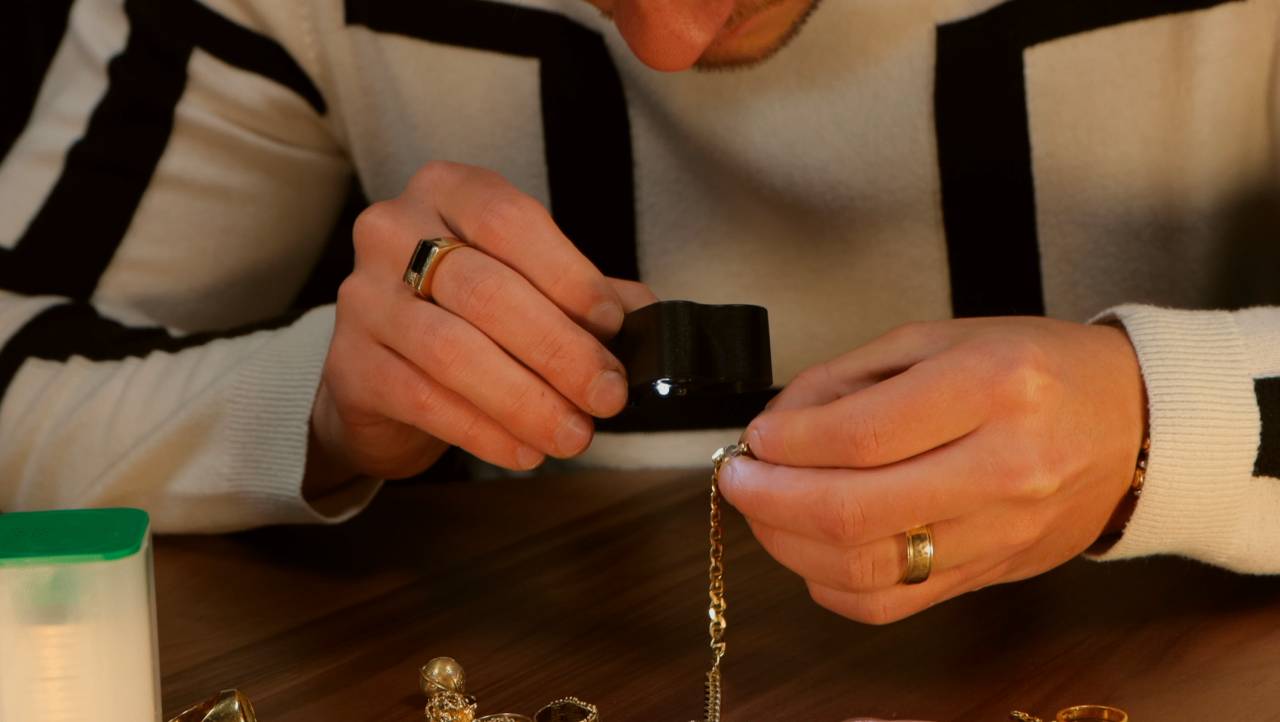
We inspect markings, construction, repairs, clasps, charms, stones and maker’s signatures. The metal is tested rather than valued from color or a stamp alone.
3. Review the weight and offer basis
We weigh the relevant components and explain what is driving the offer. You can ask how different parts were treated, which gold-market reference was used and whether finished-jewelry value was considered.
4. Accept or decline without pressure
The evaluation is free. If you accept the offer, Royal Element completes payment using an available same-day method and follows applicable transaction requirements. If you decline, you keep the bracelet and owe nothing for the evaluation.
Learn more about selling gold locally in Vancouver and how Royal Element approaches offers.
Prepare for Your Visit in Five Minutes
You do not need to appraise the bracelet yourself. A few simple steps can make the evaluation easier:
- Keep every part together. Bring loose links, detached charms, the safety chain and any stones that came from the bracelet.
- Do not aggressively clean it. Chemicals and polishing can damage patina, plating, enamel, soft stones or maker’s marks.
- Bring useful documentation. Include a receipt, grading report, appraisal, branded box or service record if available.
- Bring a current photo ID. It is required for a compliant precious-metals transaction.
- Bring a written competing offer. Royal Element’s Price Match Guarantee applies to qualifying current written offers from legitimate buyers.
An old retail appraisal is not the same as a current cash offer. Insurance appraisals often estimate replacement cost, while a purchase offer reflects today’s gold content, condition and resale market.
How to Compare Gold-Bracelet Offers
Compare the final result, not a headline, calculator or verbal range. Ask each buyer the same questions:
- What karat did each meaningful component test as?
- What payable gold weight was used?
- How were stones, charms and non-gold mechanisms handled?
- Was the bracelet evaluated only for melt, or also as wearable or designer jewelry?
- What current gold price or market reference informed the offer?
- Are any fees or deductions taken after the quoted amount?
- Can the final offer be provided in writing?
Testing that happens out of sight, unexplained deductions and pressure to decide immediately make a fair comparison difficult. A transparent buyer should be comfortable explaining the numbers.
Why Vancouver Bracelet Sellers Choose Royal Element
- Component-aware evaluation: The bracelet, clasp, charms, stones and signed details are not automatically treated as one uniform material.
- Transparent testing and weighing: See what is being evaluated and ask questions during the visit.
- Current-market pricing: Gold content is considered using current market information rather than an old retail price.
- Consideration beyond scrap: Designer, estate, collectible and gemstone value can be reviewed when relevant.
- No-obligation offer: The bracelet stays yours unless you choose to accept.
- Same-day transaction: Most straightforward evaluations and accepted offers can be completed during one visit.
- Price-match option: Bring a qualifying current written offer from a legitimate competitor for review.
Sell Your Gold Bracelet in Vancouver
Royal Element serves bracelet sellers from Downtown Vancouver, Uptown Village, Hazel Dell, Salmon Creek, Orchards, Camas, Washougal, Battle Ground, Ridgefield and communities throughout Clark County.
Royal Element Vancouver
1101 Broadway St., Suite 230A
Vancouver, WA 98660
(564) 237-7332
Monday–Friday: 9:00 a.m. 5:00 p.m.
Saturday: 10:00 a.m.-4:00 p.m.
Bring one bracelet, several pieces or an inherited jewelry collection. We will identify what you have, explain what contributes value and let you decide without pressure.
1101 Broadway St. 230A
Vancouver, WA 98660
FAQ’s About Selling Gold Bracelets in Vancouver
Yes. Broken links, damaged hinges, missing clasps and incomplete safety chains do not remove the gold that remains. Damage may reduce wearable-jewelry value, but a genuine gold bracelet can still be evaluated by purity and recoverable weight.
Fourteen-karat gold is approximately 58.5% pure gold. The bracelet-specific value depends on verified purity, payable gold weight, current gold pricing, non-gold components and any additional value from its brand, stones, condition or resale demand.
Yes. Royal Element evaluates solid, hollow, hinged and open gold bangles and cuffs in yellow, white and rose gold. Construction and weight can vary significantly, so testing is more reliable than appearance.
Yes. Bring the bracelet complete. The base bracelet and individual charms may have different purities or resale value and can be evaluated separately when appropriate.
It can be. Hollow describes construction, not purity. If the bracelet tests as karat gold, it contains valuable gold, but a hollow piece generally weighs less than a similar-size solid bracelet.
Marketable natural diamonds and certain colored gemstones may add value based on quality, condition and demand. Other stones may add little resale value and must be accounted for when determining the bracelet’s gold weight.
Yes. A missing or unreadable stamp does not prevent evaluation. Professional testing can help determine whether the bracelet contains gold and estimate its purity.
Gold-filled and plated bracelets contain much less gold than solid-karat jewelry and are not valued the same way. Bring an uncertain piece in for identification rather than scratching, filing or cutting it at home.
Sometimes. An authenticated bracelet from a recognized designer may have secondary-market value based on brand, model, condition, completeness and demand. A signature alone does not guarantee a premium, but it should be checked before the piece is treated only as scrap.
Walk-ins are welcome during business hours, and appointments are available for convenience or larger collections. Bring a current government-issued photo ID for the transaction.