

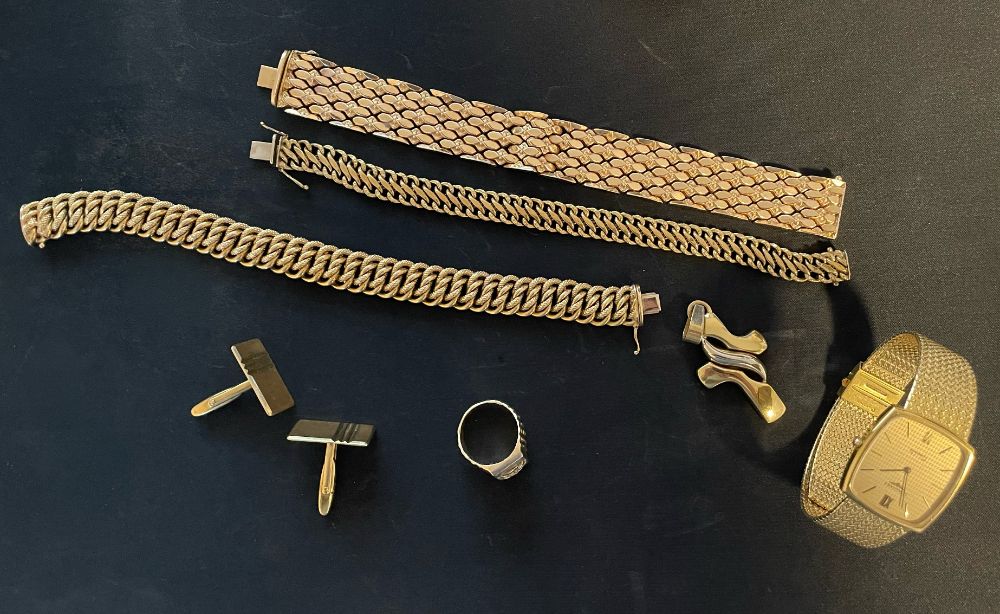
You may have a jewelry box full of pieces and almost no information about them. One ring has a tiny mark inside the band. A brooch looks older than anything else in the collection. Several chains are tangled together. There may be diamonds, colored stones, gold, costume jewelry or a mixture of all four.
You do not have to sort that out before you visit Royal Element.
Bring the jewelry as you found it. We will review the pieces with you, explain what appears to matter, and make an offer on the items we can buy. Some pieces are valued mainly for their precious-metal content. Others deserve attention as wearable jewelry, signed designer work or collectible period pieces. That distinction can make a meaningful difference.
There is no obligation to sell. If you accept an offer, the transaction can be completed during your visit.


































Start Here: Do Not Clean, Repair or Separate the Jewelry
The most useful first step is usually to leave the collection alone.
Do not polish an old piece aggressively, put delicate jewelry in an ultrasonic cleaner, remove stones, discard a damaged chain or split up a matching set. Patina, original components, maker’s marks and even an old box can help identify a piece. An unsuitable cleaner can damage pearls, opals, emeralds, glued stones or antique finishes. A repair performed before identification can also erase construction details that help date jewelry.
Instead, keep each piece with anything that belongs to it. Bring original boxes, receipts, appraisals, grading reports, repair records and family notes if you have them. Old paperwork does not guarantee a present value, but it may contain useful information.
If the collection is large, place loose pieces in separate bags or small containers. You do not need to label or weigh them.
What Counts as Estate Jewelry?
Estate jewelry simply means jewelry that has been previously owned. It does not have to come from a probate estate, and it does not have to be old.
An engagement ring purchased ten years ago can be estate jewelry. So can a Victorian brooch, a 1980s designer bracelet, a modern gold necklace inherited from a parent or a group of pieces collected over a lifetime.
Three terms are often confused:
- Estate jewelry is any previously owned jewelry.
- Vintage jewelry generally refers to an older style or period, although sellers do not use one universal age cutoff.
- Antique jewelry is commonly understood to be at least 100 years old.
Age is only one clue. An old piece is not automatically valuable, and a recent signed piece can be worth considerably more than an unsigned antique. The right question is not merely “How old is it?” It is “What is it, who made it, what is it made from, and is there a market for it now?”
We Buy Individual Pieces and Complete Jewelry Collections
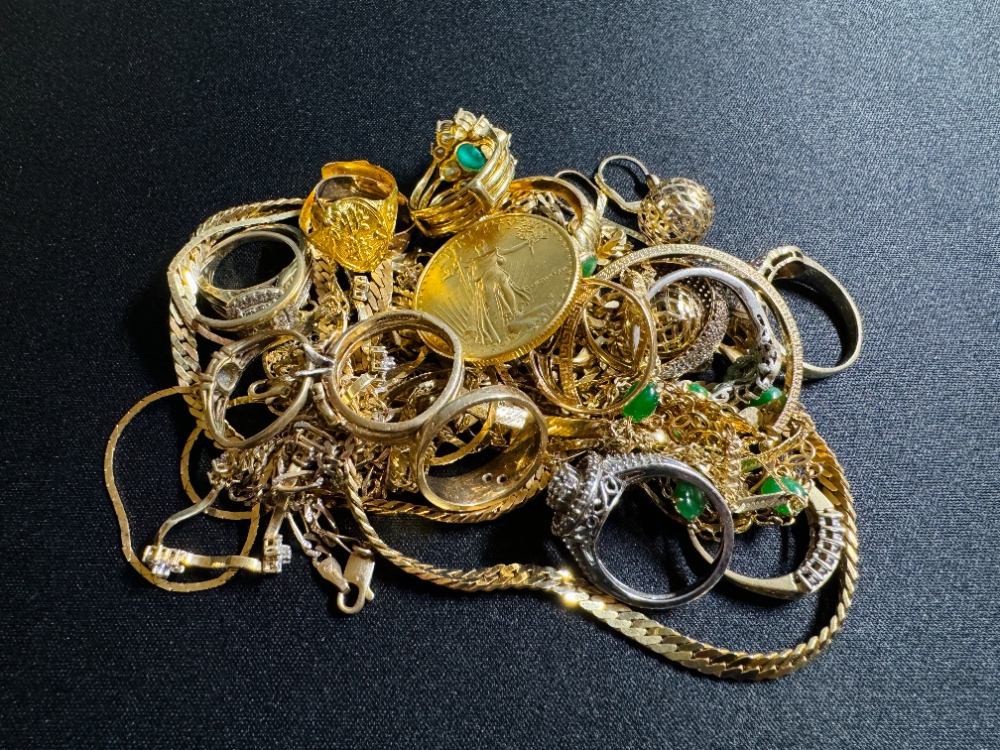
Royal Element evaluates estate jewelry in many forms, including:
- Rings, engagement rings and wedding sets
- Necklaces, pendants, lockets and chains
- Bracelets, bangles and charm bracelets
- Earrings, including single earrings and incomplete pairs
- Brooches, pins, stickpins and tie accessories
- Gold, platinum and silver jewelry
- Diamond jewelry and selected colored-gemstone jewelry
- Signed and designer jewelry
- Victorian, Edwardian, Art Nouveau, Art Deco, Retro and mid-century pieces
- Broken, worn, engraved, tangled or incomplete precious-metal jewelry
- Small groups of jewelry and collections assembled over a lifetime
If you are unsure whether an item belongs on the list, bring it or call first. A faint mark, unusual construction or overlooked signature can be easy to miss at home.
Luxury watches, coins and bullion require different evaluation methods. Royal Element buys those categories too, but they should be reviewed separately from the estate-jewelry group. Costume jewelry, fashion watches, pearls and lower-value decorative pieces may not fit our current buying needs; call ahead if those make up most of the collection.
How We Decide What Deserves a Closer Look
A thoughtful estate-jewelry evaluation is not one calculation applied to every item. The first job is to identify the most appropriate market for each piece.
A signed or collectible piece
A legible maker’s mark, signature, serial number, collection name or distinctive design can move a piece out of the scrap category. Buyers may seek jewelry from houses such as Cartier, Tiffany & Co., Van Cleef & Arpels, Bulgari and other recognized makers. Regional artisans and less familiar historical makers can matter too.
The signature must be considered with the design, construction and materials. A stamp by itself does not prove authenticity, and counterfeit marks exist.
A well-made piece with a resale market
Not every desirable estate piece carries a famous name. Good proportions, quality setting work, an appealing period design, substantial construction and attractive natural stones may give unsigned jewelry value as a complete item.
A gemstone-led piece
In some jewelry, the diamond or colored gemstone is the main source of value. Size is only the beginning. Cut, color, clarity, condition, treatments, origin when supportable, and whether a stone is natural or laboratory-grown can affect demand. A laboratory report can help, but the report number and stone still need to correspond.
A precious-metal piece
Many broken, dated, incomplete or ordinary pieces are valued mainly for recoverable gold, platinum or silver. In that case, purity, eligible metal weight and the current market price become central. Stones, steel springs, solder, non-precious components and other materials may not be included in metal weight.
Choosing the right path before calculating an offer is important. A ring with collector demand should not be treated automatically as a small pile of gold. At the same time, age, an emotional history or a high original retail price does not create resale demand by itself.
What Affects the Value of Estate Jewelry?
Maker, signature and authenticity
Signed jewelry can command a premium when the maker is sought after and the piece can be authenticated. Original hallmarks, serial numbers, design details, paperwork and packaging may all help. A famous name does not guarantee a premium if the mark is questionable, the piece has been heavily altered or the model has weak resale demand.
Design period and present-day demand
Art Deco geometry, Victorian symbolism, Edwardian platinum work and bold Retro forms appeal to different buyers. Period identification can help place a piece, but current demand still controls what the market will support. Two pieces of the same age can have very different values.
Precious metal and purity
Gold may be marked 10K, 14K, 18K, 22K or with numerical equivalents such as 417, 585, 750 and 916. Platinum, sterling silver and European marks use other systems. Marks are useful starting points, not a substitute for testing. Components added during an old repair may differ from the main piece.
For items valued mainly as precious metal, the basic relationship is straightforward:
eligible metal weight × tested purity × current market price = estimated gross metal value
An actual purchase offer is not the same as gross metal value. It also reflects non-precious weight, processing, market risk and the buyer’s margin. Royal Element’s gold calculator can help you understand metal value before a visit, but it cannot identify collector, designer or gemstone value.
Diamonds and colored gemstones
Diamonds are considered individually. The familiar four Cs—cut, color, clarity and carat weight—matter, but so do shape, fluorescence, condition, natural versus laboratory-grown origin, and current buyer demand. Small accent diamonds are not valued the same way as a larger center stone.
Colored stones require a different approach. Species, variety, color, transparency, cutting, condition and treatments may all matter. A red stone is not necessarily a ruby, and a blue stone is not necessarily a sapphire. Some attractive stones have limited resale value; some understated stones are far more important than they first appear.
Condition and alterations
Normal wear does not make fine jewelry worthless. Broken clasps, missing stones, bent prongs, worn engraving and shortened chains can affect the cost and practicality of resale, but the metal and remaining components may still have value.
Condition matters differently for collectible jewelry. Heavy polishing, replaced parts, an altered ring size or a removed maker’s mark can reduce collector interest. This is why repairing or refinishing an unidentified piece before evaluation is rarely helpful.
Provenance and original materials
Provenance means a documented history of ownership. A family story can be meaningful without changing market value. A story supported by dated receipts, photographs, correspondence, maker records or verifiable public history may be more useful.
Keep matching earrings, suites and original components together. Preserve boxes, pouches, certificates and grading reports. These do not always add money, but separating them can remove information a buyer needs.
The likely selling market
Value depends partly on where a piece can realistically be sold. A rare signed jewel may suit a specialist auction. An attractive wearable ring may have a retail resale market. A broken 14K chain may be worth most as metal. The best evaluation recognizes that these are different markets with different costs, timelines and buyers.
An Old Appraisal Is Not the Same as a Current Cash Offer
This is one of the most important things to understand before selling inherited jewelry.
An insurance appraisal commonly estimates what it could cost to replace an item through a retail source. A fair-market-value appraisal answers a different question. A direct purchase offer answers another: what a buyer can pay now while taking on authentication, holding, repair, selling costs and the risk that the item may not resell quickly.
That is why a ring with a $10,000 insurance appraisal may not produce a $10,000 purchase offer. The appraisal may be old, based on retail replacement, or written when diamond and jewelry markets were different. This gap does not automatically mean the offer is unfair. It means the two numbers describe different things.
Royal Element’s in-person evaluation is designed to support a possible purchase. It should not be presented as a written appraisal for insurance, probate, tax reporting, divorce or equitable distribution unless a separate qualified appraisal service has been specifically arranged.
When should you get an independent written appraisal first?
Pause before selling when:
- An executor, attorney, court, insurer or tax professional requires a documented value
- Ownership is disputed or several heirs must divide property fairly
- A piece appears unusually rare, historically important or exceptionally valuable
- You plan to insure, donate or keep the jewelry rather than sell it
- You need a value as of a past date, such as the owner’s date of death
- You want an opinion from someone who is not also making a purchase offer
A qualified independent appraiser can define the type of value needed and prepare documentation for that purpose. If you are administering an estate, ask the estate attorney or tax professional what kind of valuation is required before disposing of property.
Direct Sale, Consignment, Auction or Selling It Yourself?
There is no single best route for every piece. The right choice depends on what you own and what you value most: speed, certainty, convenience, control or the possibility of a higher future return.
A direct local sale
A direct sale is designed for clarity and speed. You receive an offer, decide whether to accept it, and do not wait for an end buyer. The buyer takes on the cost and risk of holding, repairing, authenticating and reselling the jewelry. Because of that, a direct offer will be below an eventual retail asking price.
This route often makes sense when you want a private in-person transaction, a prompt decision, no shipping, no listing work and no uncertainty about whether an item will sell.
Consignment
With consignment, the owner is paid after a piece sells. A good consignor may reach retail customers and potentially produce a higher net amount for a desirable piece, but there is no guaranteed sale date. Commission, insurance, photography, repair, return and markdown terms should be understood in writing.
Auction
Auction can be appropriate for rare, strongly attributed or highly sought-after jewelry. Competitive bidding can help when several informed buyers want the same piece. Results are not guaranteed, and seller’s commission, insurance, photography, shipping, reserve terms and the time until settlement all matter.
A private marketplace sale
Selling directly to another consumer may offer the highest theoretical gross price. It also requires accurate descriptions, good photographs, secure payment, insurance, shipping or safe meetings, and a plan for returns or disputes. High-value jewelry attracts fraud, and an unknown seller may struggle to establish trust.
Royal Element offers the direct local-sale option. We want you to understand the tradeoff before you choose it. If a piece appears better suited to formal appraisal, specialist research or another selling channel, the honest next step may be to pause rather than rush.
What to Bring to Your Estate Jewelry Evaluation
Bring the jewelry and a current government-issued photo ID. Washington law requires identification and transaction records when a secondhand precious-metal dealer purchases covered property.
Also bring anything that may help identify the pieces:
- Original jewelry boxes, pouches and tags
- Sales receipts and repair receipts
- Previous appraisals
- Diamond or gemstone grading reports
- Brand certificates, serial-number records or service papers
- A list connecting loose pieces to their documents
- Estate or executor paperwork if you are acting for an estate
You do not need to bring a bathroom scale, guess the karat or research every hallmark. You also do not need to decide in advance which pieces are valuable.
Before selling, make sure you own the items or have clear authority to act for the owner or estate. If probate is open, beneficiaries disagree or ownership is uncertain, speak with the estate’s attorney before completing a sale.
What Happens During a Visit to Royal Element?
1. We ask what you brought and what you want to accomplish
Some visitors have one inherited ring. Others are sorting a parent’s entire jewelry box. Tell us whether you want to sell everything, review only selected pieces or separate likely valuables from items that need another kind of specialist.
2. We examine the jewelry before grouping it
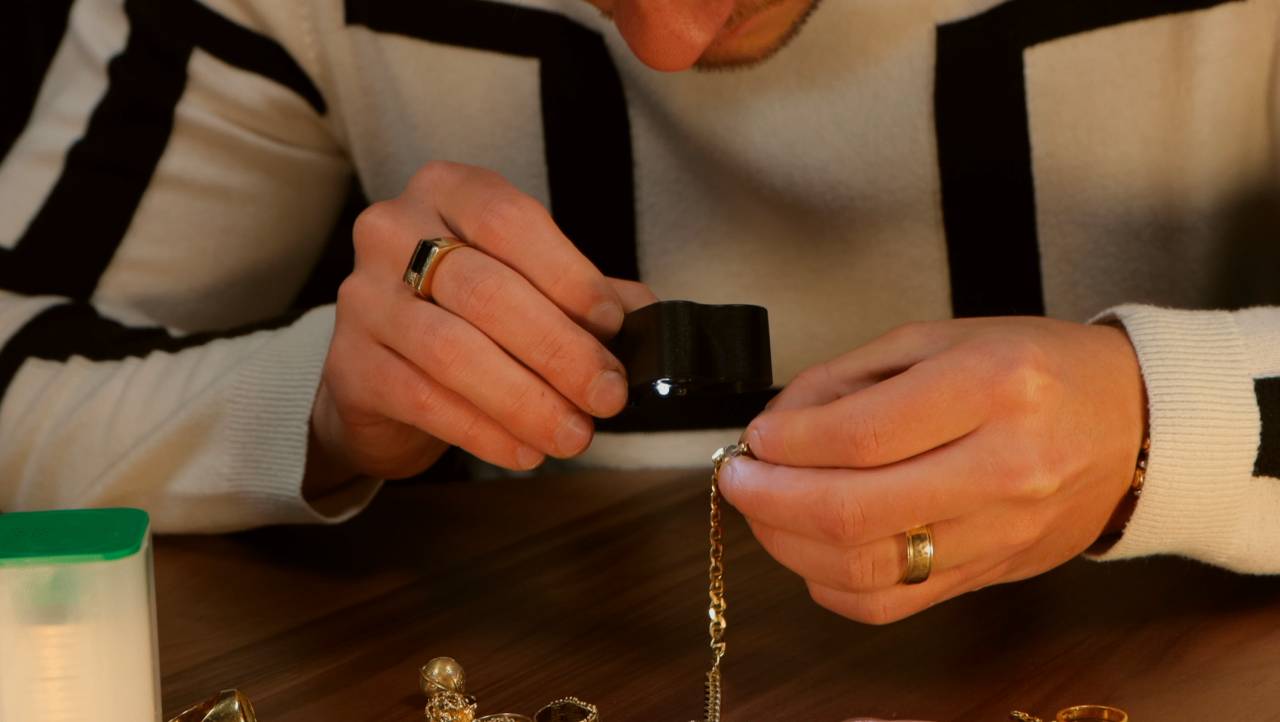
We look for metal marks, maker’s marks, construction clues, signatures, stone characteristics, condition and pieces that belong together. Items should not be grouped by color alone. White metal, for example, could be platinum, white gold, silver, plated metal or something else.
3. Relevant items are tested and weighed
When precious-metal content drives value, purity and eligible weight are considered with the current market. Gemstone, designer or resale factors are reviewed separately when they are relevant. Ask to see the numbers and hear the reasoning behind the offer.
4. You receive an offer on the items Royal Element can buy
The explanation should tell you whether the offer is based primarily on metal, the complete piece, a diamond or gemstone, designer demand, or a combination. A collection does not have to be sold all at once. You may accept some items and keep others.
5. You decide
There is no obligation to sell. Ask questions, compare the offer with your priorities and take more time if you need it. If you accept, we complete the required identification and transaction records and issue payment for the purchase.
Questions Worth Asking Any Estate Jewelry Buyer
A good conversation should leave you with more than one unexplained number. Ask:
- Is this piece being valued as jewelry or mainly for its metal?
- Did you find a maker’s mark or signature?
- Are the center stone and smaller stones included in the offer?
- Was the item tested, and what purity did the test indicate?
- What weight is being used for the calculation?
- Is the offer for this item alone or only if I sell the group?
- Are there fees, commissions, shipping costs or later deductions?
- When is payment final?
- May I decline the offer and take the jewelry with me?
If a buyer cannot explain the basis of an offer in plain language, you do not have enough information to compare it.
Selling a Large Inherited Jewelry Collection
A large collection deserves a slower first pass. Do not let the volume force every item into one category.
Keep sets, boxes and paperwork together. Make a simple photo inventory if several heirs or an executor need a record. Do not distribute pieces until any required valuation and ownership questions have been resolved. If family members are choosing keepsakes, complete that process before asking a buyer to purchase the remainder.
Call Royal Element before bringing a substantial collection. We can help you plan enough time for the review and explain what identification or authority documents may be needed. For security, avoid carrying an inherited collection to several unplanned stops in one day.
Sell Estate Jewelry Locally in Vancouver
Royal Element’s Vancouver office gives you a face-to-face alternative to mailing jewelry to an unknown buyer. You can bring one piece or a collection, ask questions during the evaluation and decide without waiting for an online listing or auction date.
Royal Element Vancouver
1101 Broadway St., Suite 230A
Vancouver, WA 98660
(564) 237-7332
Monday–Friday: 9:00 a.m. 5:00 p.m.
Saturday: 10:00 a.m.-4:00 p.m.
Walk-ins are welcome. Call ahead for a large collection or to confirm current hours.
1101 Broadway St. 230A
Vancouver, WA 98660
Frequently Asked Questions About Selling Estate Jewelry
No. Estate jewelry means previously owned jewelry. It can be modern, vintage or antique. Antique jewelry is commonly understood to be at least 100 years old, while “vintage” is used more loosely for older period jewelry.
Hallmarks and paperwork can provide clues, but neither is conclusive by itself. Metal testing, examination of construction and gemstone identification may be needed. Do not rely only on a magnet test, an at-home acid kit or an online photo comparison.
Yes. A prior appraisal is not required for a direct purchase evaluation. Bring one if you have it because it may contain measurements, stone details or identifying information. The current offer will depend on the item and today’s market, not simply the appraisal amount.
No. A purchase offer states what a buyer is prepared to pay under the terms presented. A written appraisal is prepared for a defined purpose, such as insurance, estate administration, tax reporting or fair-market-value documentation. If you need formal documentation, arrange an independent qualified appraisal before selling.
Insurance appraisals often estimate retail replacement cost. A direct buyer must account for the time, cost and risk involved in authenticating, repairing, holding and reselling an item. The two figures answer different questions and should not be expected to match.
Yes, many broken, worn, tangled, engraved or incomplete pieces still have precious-metal value. A damaged signed or period piece may also deserve review before it is treated as scrap. Bring loose stones and broken components with the item if you have them.
Royal Element buys diamond jewelry and selected gemstone jewelry. Whether a stone contributes separately to an offer depends on its identity, size, quality, condition and market demand. Ask how each important stone is being considered.
An absent or unreadable stamp does not prove that an item is fake. Marks wear away, old systems vary, and resized rings sometimes lose hallmarks. The piece can still be examined and tested.
Usually not. A gentle dry wipe is enough for most items. Avoid chemical dips, abrasive polish, ultrasonic cleaning and home repairs, especially with pearls, opals, emeralds, enamel, foil-backed stones or antique jewelry.
No. Leave the piece intact until it has been evaluated. Removing stones can damage them, destroy useful construction clues and reduce the value of jewelry that should remain complete.
Sometimes. Original packaging, receipts, certificates, grading reports and service records can support identification and buyer confidence, especially for designer jewelry and important stones. They do not guarantee a higher offer, but they are worth bringing.
Yes. You can request an offer on selected pieces and keep the rest. If pieces form a matching set or signed suite, have them reviewed together before separating them.
You must own the jewelry or have legal authority to sell it. If the items still belong to an estate, probate is open or heirs disagree, confirm authority with the estate’s attorney or personal representative before a transaction.
Bring one current government-issued photo ID. Washington law requires secondhand precious-metal dealers to record seller and transaction information for covered purchases.
Walk-ins are welcome. Call ahead if you have a large collection, need extra time, or want to confirm current hours before traveling to the Vancouver office.
It depends on the number and complexity of the pieces. A single straightforward item may be reviewed quickly. A mixed collection with gemstones, signatures, paperwork and period pieces takes longer. Calling ahead helps Royal Element reserve enough time.
No. You may accept or decline the offer, sell selected pieces, or take time to consider your options. If a formal appraisal, family decision or specialist review should come first, pause before selling.
Bring the Jewelry. Leave With Clearer Answers.
You do not need to become a gemologist, decode every hallmark or decide what is valuable at the kitchen table. Bring the pieces, their paperwork and your questions to Royal Element in Vancouver. We will explain what we can identify, what affects the offer and which items we can buy. The decision remains yours.