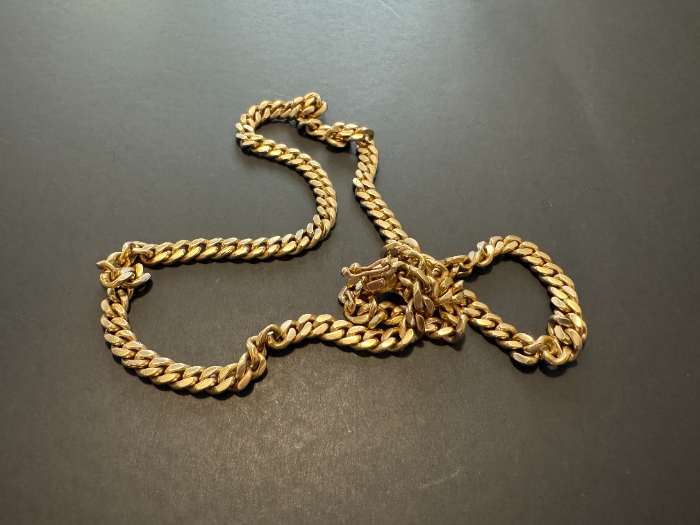
Have a gold chain you no longer wear? Bring it to Royal Element for a free, no-pressure evaluation in Vancouver. We buy chains in wearable, broken, tangled and damaged condition—including Cuban, rope, Figaro, curb, box and other popular styles.
Your chain is tested, weighed and evaluated using the current gold market. We explain the results and present an offer; you decide whether selling is right for you.
Walk-ins welcome · No obligation to sell · Instant payment when you accept.
































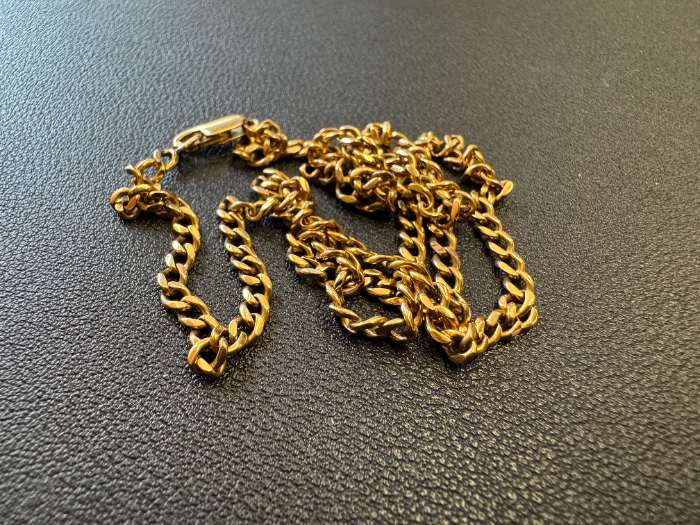
What Is a Gold Chain Worth?
The honest answer is that a chain cannot be priced accurately from its length, width or appearance alone. Three measurable details establish its basic gold value:
- Its tested purity—such as 10K, 14K or 18K
- Its precious-metal weight—usually measured in grams or pennyweight
- The current gold price—which changes throughout the trading day
Condition, construction, brand and resale demand can then affect whether the chain is valued only for its metal or also as wearable jewelry.
A heavy 10K chain can contain more pure gold than a lightweight 18K chain. A thick hollow chain can weigh less than a narrow solid chain. That is why a final offer should follow testing and weighing, not a visual guess.
Understand the Gold-Content Calculation Before You Sell
Karat tells you the percentage of pure gold in the alloy:
| Mark on chain | Approximate gold purity | Pure-gold equivalent in a 20-gram chain* |
|---|---|---|
| 10K or 417 | 41.7% | 8.34 grams |
| 14K or 585 | 58.5% | 11.70 grams |
| 18K or 750 | 75.0% | 15.00 grams |
| 22K or 916 | 91.6% | 18.32 grams |
*Before adjustments for clasps, stones, solder, non-gold components or testing results.
The basic benchmark is:
Chain weight × tested purity × current pure-gold price per gram = estimated theoretical melt value
Theoretical melt value is not the same as a purchase offer. A buyer must account for refining, processing, market risk and business costs. A wearable or collectible chain may also be evaluated differently from scrap. Use Royal Element’s live gold calculator for an estimate, then obtain a chain-specific offer after testing.
We Buy Gold Chains in Many Styles
Royal Element evaluates men’s and women’s chains, including:
- Cuban and Miami Cuban links
- Rope and diamond-cut rope chains
- Figaro and curb chains
- Box, cable and wheat chains
- Franco and Byzantine chains
- Mariner and anchor links
- Snake and herringbone chains
- Singapore and popcorn chains
- White-gold and rose-gold chains
- Chains with crosses, medallions, charms or pendants
- Vintage, estate and designer chains
- Broken, kinked, stretched and tangled chains
- Chains with missing or damaged clasps
- Unmarked chains that require testing
- 10K, 14K, 18K, 22K and other gold purities
Do not pay to repair or polish a chain before bringing it in. Repairs may not increase a metal-based offer, and aggressive cleaning can damage finishes or delicate links.
Have other pieces to sell? Royal Element also evaluates rings, bracelets, earrings and other gold jewelry.
Solid, Hollow or Semi-Hollow: Why Construction Matters
Two chains can look almost identical while having very different weights.
Solid gold chain
“Solid” refers to the links being made from gold alloy throughout rather than formed as hollow shells. A solid chain generally weighs more than a hollow chain of the same length and width. It may also have stronger finished-jewelry resale potential when the style and condition are desirable.
Hollow gold chain
A hollow chain can still be genuine karat gold. It uses less metal by forming the links around empty space. Hollow chains often look large for their weight and may dent, split or stretch more easily.
Hollow does not mean fake; it means the value cannot be estimated from visual size. Actual weight and purity remain the key measurements.
Semi-hollow or mixed construction
Some chains use partially hollow links or combine components made in different ways. Replacement clasps, jump rings, solder and pendants may also have different purities. A careful evaluation should identify meaningful differences rather than assign one unverified karat to the entire piece.
Does Damage Lower the Value of a Gold Chain?
The effect depends on whether the chain is being purchased as wearable jewelry or primarily for its gold content.
| Chain condition | Likely effect on evaluation |
| Broken clasp | Often limited effect on metal value; may reduce resale potential |
| Tangled chain | Usually little effect on gold content; do not force it apart at home |
| Kinked or stretched links | Gold remains valuable, but finished-jewelry demand may decline |
| Missing section | Remaining gold still has value based on tested weight and purity |
| Heavy wear or old repairs | May require additional testing of different sections |
| Intact desirable style | May have value as a wearable chain beyond basic melt |
| Recognizable designer chain | Brand authenticity and secondary-market demand should be considered |
A broken chain is not worthless. If it is genuine gold, the recoverable precious metal remains valuable even when the chain can no longer be worn.
Three Ways a Gold Chain May Be Valued
1. Primarily for its gold content
This is common for broken, heavily worn, generic or low-demand chains. The evaluation focuses on tested purity, recoverable weight and the current gold market.
2. As wearable finished jewelry
An intact, attractive chain in a desirable style may have resale potential. Link style, length, width, weight, workmanship and condition can matter in addition to its gold content.
3. As a designer or collectible piece
A signed chain from a recognized maker may deserve additional research. Original paperwork, packaging and receipts can help establish authenticity. Brand alone does not guarantee a premium, but it should not be ignored when legitimate resale demand exists.
Royal Element evaluates the complete item and explains what is driving the offer. If the chain is being valued only for gold, you should be able to ask why finished-jewelry value was not applied.
What About the Clasp, Pendant or Stones?
The number on a clasp may refer to the chain, the clasp or both—but it still needs verification. Clasps can contain small base-metal springs, while pendants and charms can have different karats from the chain.
Bring the chain with all attached pieces. Do not remove stones or pendants unless they were already separate. During evaluation:
- The chain and pendant may be tested independently.
- A replacement clasp may be treated separately.
- Non-gold parts may be accounted for in the weight.
- Natural diamonds or marketable gemstones may be considered when quality and demand justify it.
- Small, damaged or low-demand stones may add limited value.
If you have a grading report, branded box, appraisal or original receipt, bring it with you.
Is the Chain Solid Gold, Gold-Filled or Gold-Plated?
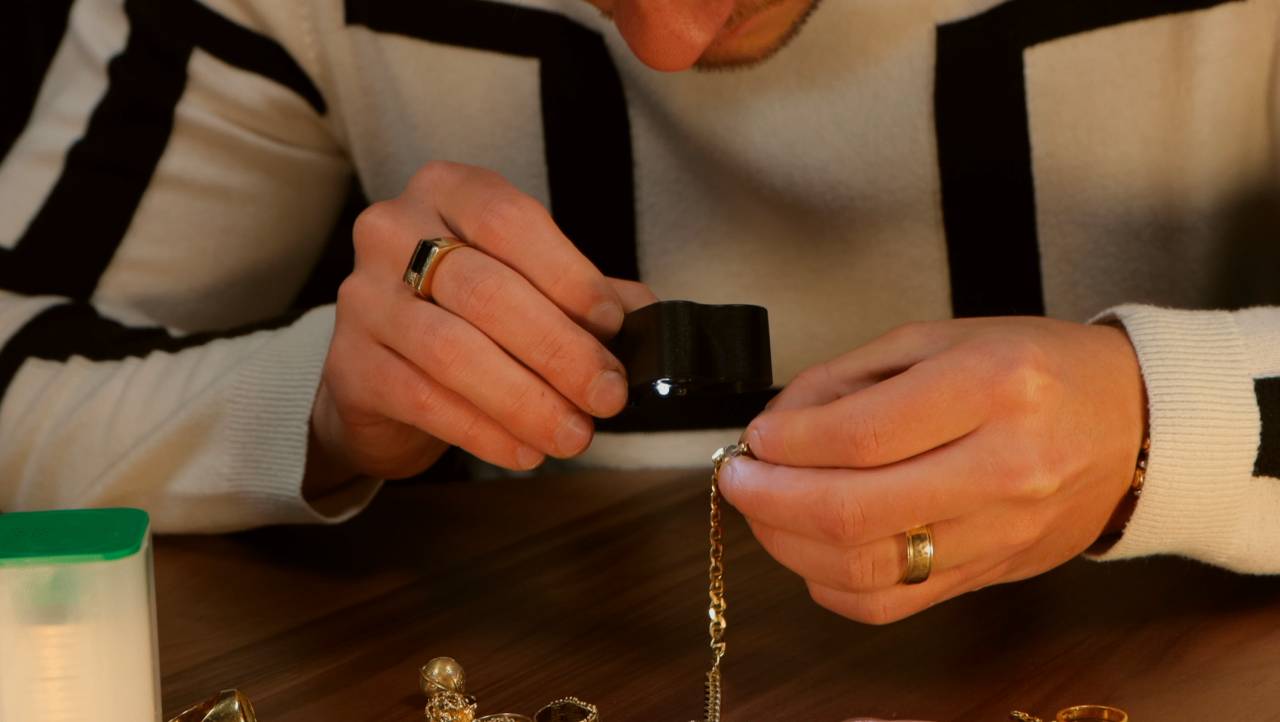
Gold color is not proof that a chain is solid-karat gold. Look near the clasp or end tag for markings:
| Marking | General meaning |
| 10K, 14K, 18K, 22K | Karat-gold alloy, subject to verification |
| 417, 585, 750, 916 | Common fineness equivalents for 10K, 14K, 18K and 22K |
| GF | Gold-filled material over a base-metal core |
| RGP | Rolled gold plate |
| GP or GEP | Gold-plated or electroplated material |
| Vermeil | Gold plating over sterling silver |
Gold-filled and plated chains contain much less gold than solid-karat chains and are not valued the same way. Do not scratch, cut or file the chain yourself. Professional testing can identify the material without relying only on appearance.
How Selling a Gold Chain at Royal Element Works
Bring the chain and your photo ID
Walk into the Vancouver office during business hours or reserve a time for a larger collection. Bring the chain as it is—broken, tangled or unmarked is fine. A current government-issued photo ID is required for precious-metals transactions.
See what is being evaluated
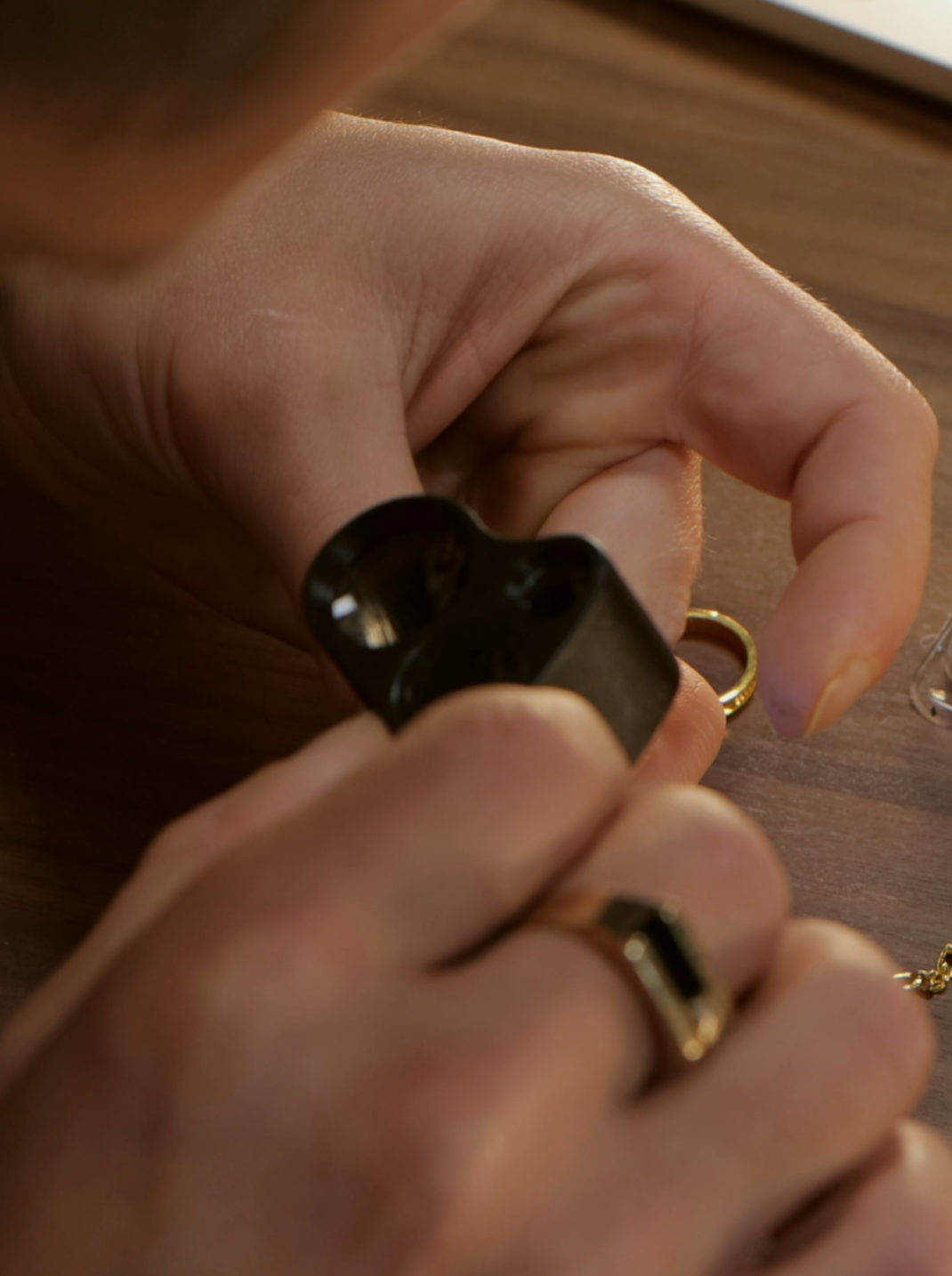
We inspect the chain, check its markings, test the gold and weigh relevant components. If the clasp, pendant or repaired section differs, it can be considered separately.
Review the offer
We explain the tested purity, weight and current-market basis of the offer. You can ask whether the chain is being valued as metal, wearable jewelry or a designer piece.
Accept or decline
The decision is yours. The evaluation is free and carries no obligation to sell. If you accept, Royal Element completes payment using an available same-day method and follows applicable transaction requirements.
Learn more about selling gold locally in Vancouver and how Royal Element calculates offers.
Local Gold Buyer, Pawnshop or Online Buyer?
| Selling method | Possible advantage | Important tradeoff |
| Local precious-metals buyer | In-person testing, immediate questions and fast decision | Compare the actual percentage or deductions applied to melt value |
| Jewelry or estate specialist | May recognize wearable, designer or collectible value | May not want generic or damaged chains |
| Pawnshop | Offers a sale or a collateral loan | A loan includes interest, fees and a redemption deadline; purchase offers may be lower |
| Online mail-in buyer | National competition and standardized process | Requires shipping the chain and waiting for remote evaluation |
| Marketplace or private sale | Potential access to a retail buyer | Listing fees, fraud risk, returns, shipping and uncertain timing |
The best route depends on the chain and your priorities. If the chain is ordinary or broken, transparent gold-content pricing may matter most. If it is designer, collectible or highly wearable, compare an offer that considers resale demand before accepting a scrap-only price.
How to Compare Gold Chain Offers Fairly
Before comparing two offers, confirm that they use the same item and the same basis:
- Ask what karat the chain tested as.
- Ask what payable weight was used.
- Ask whether the clasp, pendant or stones were deducted or evaluated separately.
- Ask what gold reference price was used.
- Ask whether the offer includes any resale value.
- Compare final written offers—not calculator results, verbal ranges or retail appraisals.
Royal Element’s Price Match Guarantee requires a current written offer from another legitimate buyer. Bring the document so the comparison can be based on the same chain and transaction terms.
Sell Your Gold Chain in Vancouver
Royal Element provides local gold-chain evaluations for customers in downtown Vancouver and throughout the surrounding Vancouver and Clark County area.
Royal Element Vancouver
1101 Broadway St., Suite 230A
Vancouver, WA 98660
(564) 237-7332
Monday–Friday: 9:00 a.m. 5:00 p.m.
Saturday: 10:00 a.m.-4:00 p.m.
1101 Broadway St. 230A
Vancouver, WA 98660
FAQ’s About Selling Gold Chains in Vancouver
Yes. Broken links, a failed clasp, kinks or missing sections do not remove the value of the gold that remains. Condition may reduce finished-jewelry resale value, but tested purity and weight still establish the underlying metal value.
Fourteen-karat gold is approximately 58.5% pure gold. The chain’s value depends on its tested weight, current gold price, construction, non-gold components and whether it has additional wearable, designer or collectible value.
It can be. Hollow describes construction, not purity. A hollow 14K chain is still 14K gold if testing verifies the alloy, but it contains less metal than a similarly sized solid chain.
Yes. Royal Element evaluates Cuban, Miami Cuban, rope, Figaro, curb, box, wheat, Franco and many other chain styles in wearable or damaged condition.
Yes. Stamps can be worn away, missing or unreliable. Testing is used to identify whether the chain contains gold and determine its approximate purity.
No. Bring the chain and pendant together unless they were already separate. They may have different purities and can be tested and evaluated independently.
No. Repair and cleaning usually do not increase a metal-based offer. Bring the chain as it is to avoid damaging delicate or hollow links.
No. Walk-ins are welcome during business hours. An appointment is useful when you have several chains, an estate collection or prefer a reserved time.
Bring a current government-issued photo ID, such as a driver’s license or passport. Precious-metals dealers must collect identification and transaction records required by applicable law.